


Neopentyl Glycol Dimethacrylate in Powder Coating Resins: What Formulators Should Check
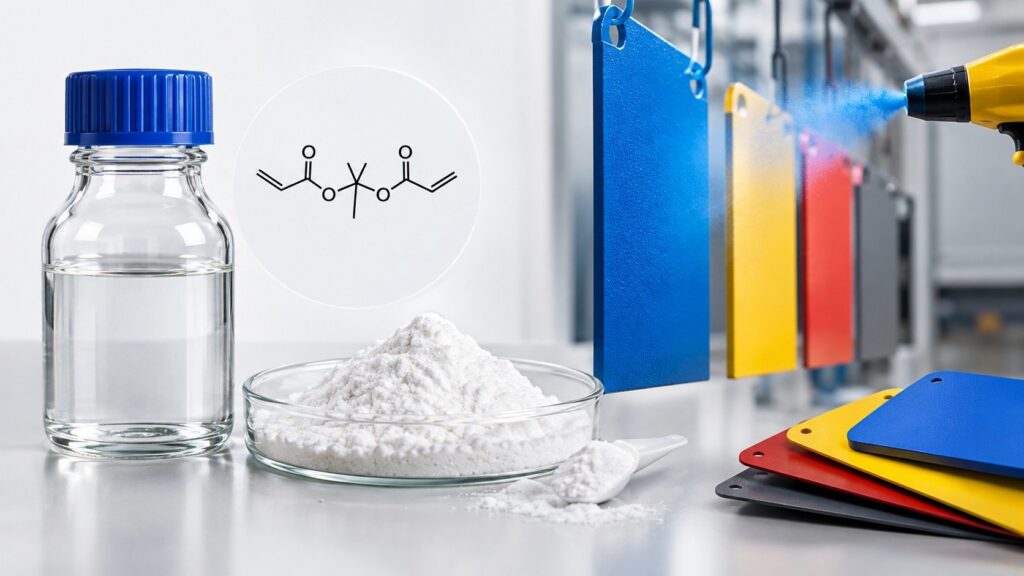
The powder feeds smoothly through the extruder and sprays well, but after three weeks in storage, the material has hardened into a lump. The film chemistry was not the problem. The additive increased crosslink density but also made the powder more prone to sintering during storage. This is a common trade-off when selecting a crosslinker […]
Choosing an Acrylic Resin Manufacturer: CHMA, n-BMA and LMA Compared
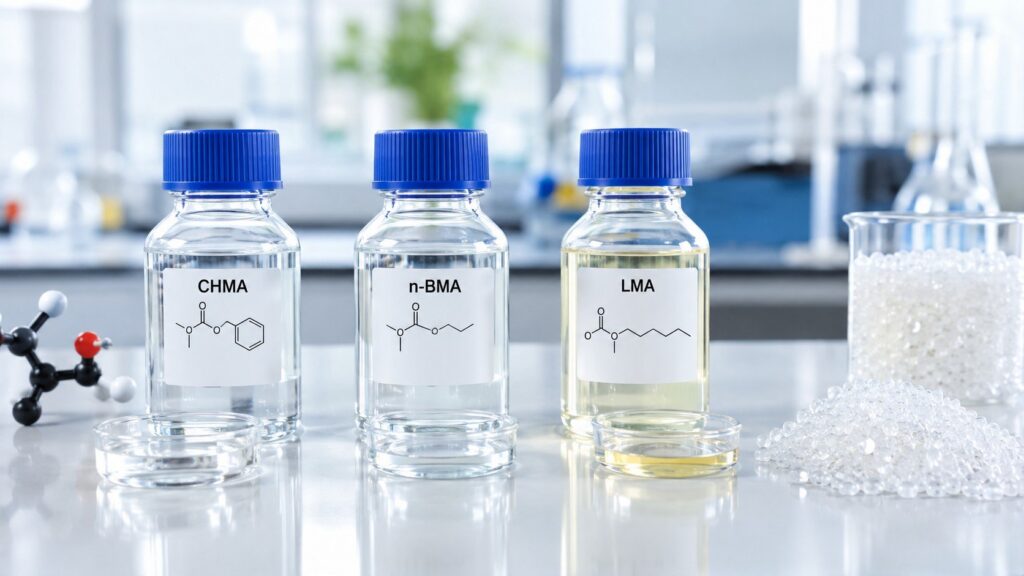
A weatherable acrylic resin has to survive ten years on a building facade or a car body without chalking, cracking or going soft in the sun. No manufacturer’s name on the drum guarantees that. What guarantees it is the mix of hard and soft methacrylates in the resin, chosen well and documented in full. CHMA, […]
Impact Modifiers in Rigid Plastics: 2-Ethylhexyl Methacrylate as a Comonomer
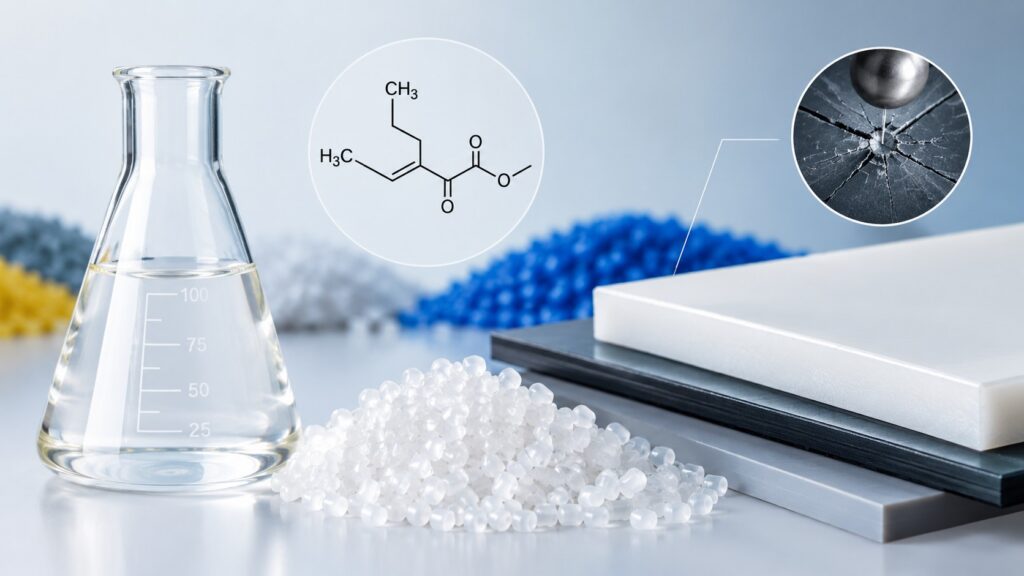
A window profile might perform well in a tensile test but break on impact during winter. Its resistance to pulling forces does not necessarily mean it can handle a sudden blow at low temperatures. An impact modifier helps reduce this risk by improving a rigid polymer’s ability to withstand sudden force. This article looks at […]
Formulating with Acrylic Polymer Emulsions: How 2-EHMA, Isobutyl and Tert-Butyl Acrylate Perform
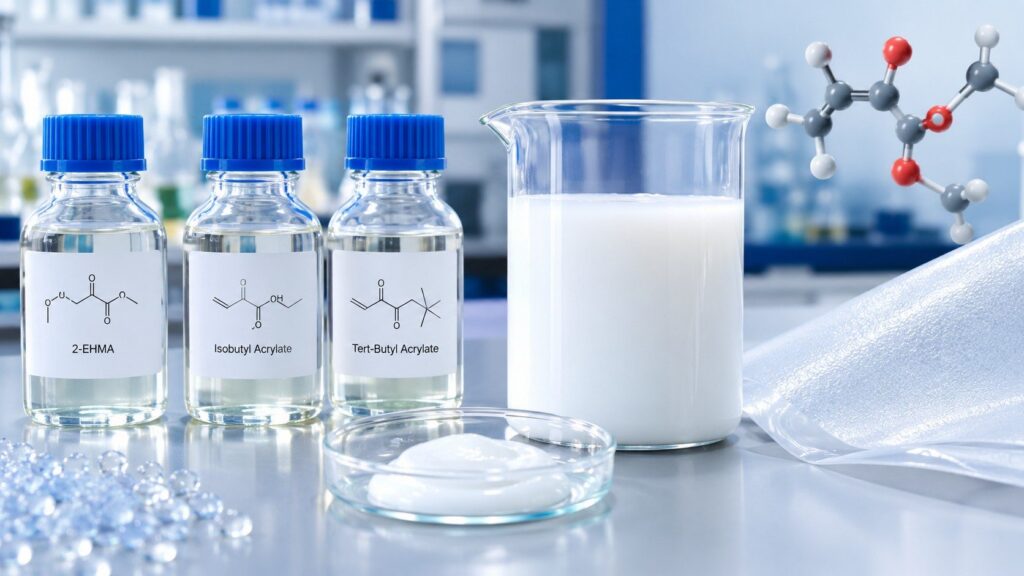
Getting the monomer balance right is important when formulating a film. It must stay flexible enough to avoid cracking at low temperatures, but it must also be hard enough to prevent blocking and resist water. In an acrylic polymer emulsion, these properties depend partly on how much hard and soft monomer goes into the polymer. […]
Cosmetic Ingredient Supplier Guide: Sourcing DMAEMA for Personal Care Formulators
A conditioner may pass bench testing but fail during production. After a month on the shelf, the base may change viscosity, and a new batch from the same supplier may perform differently. The formula stays the same, but the raw material does not. For formulators and procurement teams choosing a new cationic conditioning ingredient supplier, […]
Dye Fixing Agents in Textile Finishing: Where DMAEMA and 2-Ethylhexyl Methacrylate Fit In
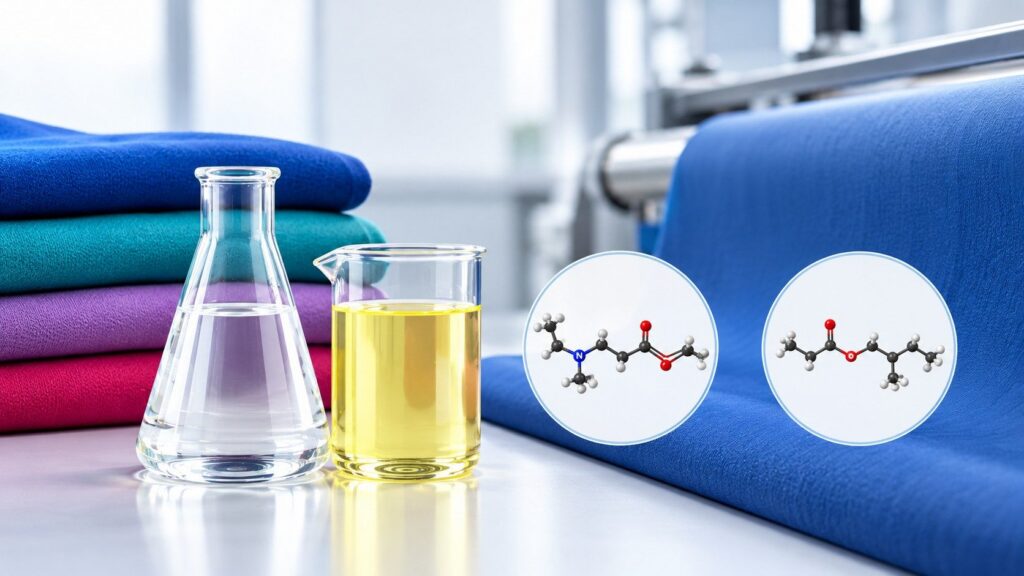
A dyed cotton shirt goes through its first wash, and the water takes on the shirt’s colour. The next load picks up a tint, and the collar rubs off on a jacket. The dye reached the fabric, but it did not stay there. For a dye house or a finishing formulator, that failure shows up […]
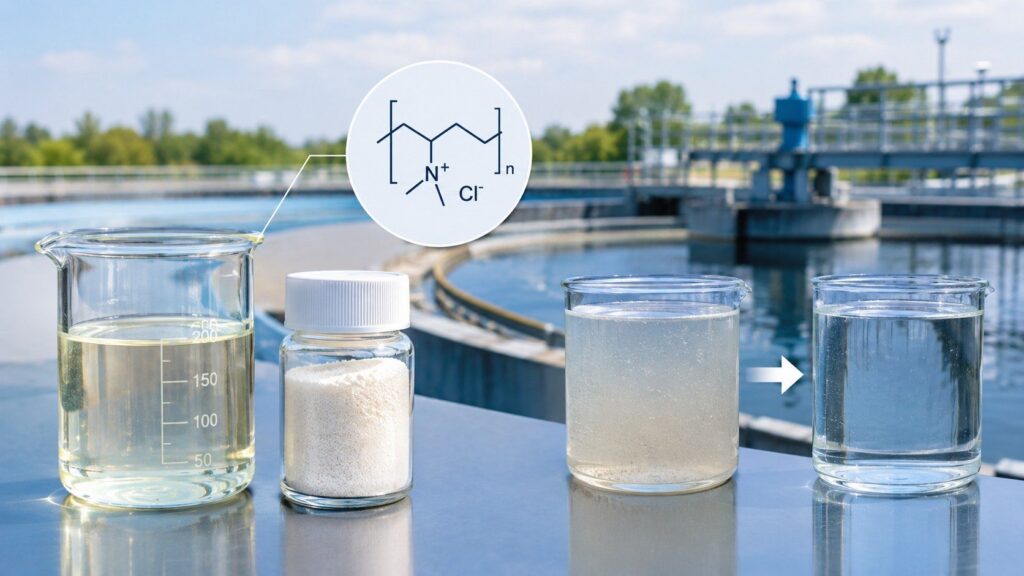
Coagulant Chemicals Explained: How DMAEMA-Based Polymers Treat Water
Mineral deposits from produced water can gradually restrict flow through pipelines and chokes. This increases differential pressure and puts extra load on downhole pumps, even when output remains unchanged. Using a scale inhibitor chemical helps prevent scale buildup and reduces the need for costly equipment removal and cleaning. This article explains how scale forms, how […]
Scale Inhibitor Chemicals for Oilfield Water Treatment: The Role of DMAEMA
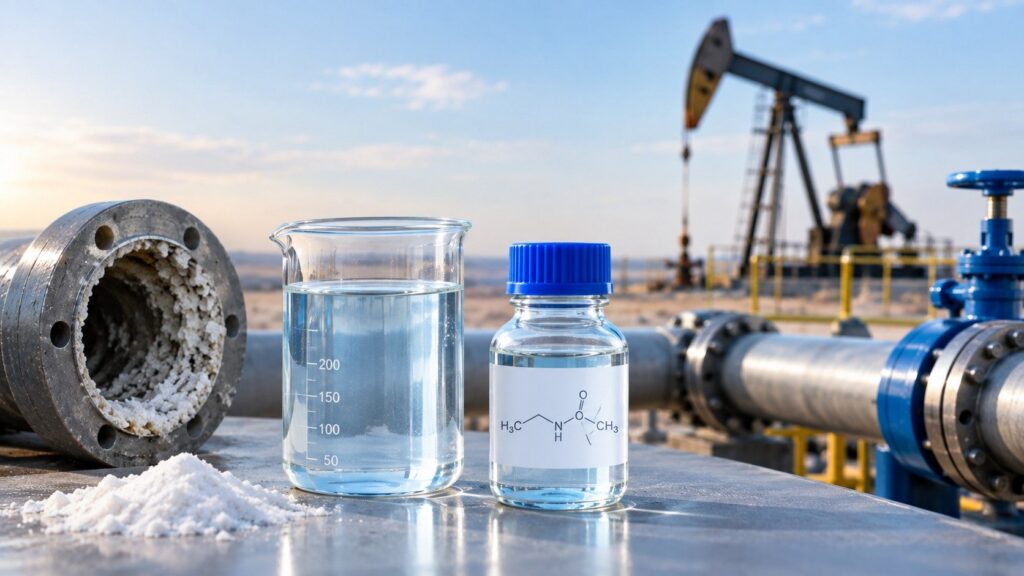
Mineral deposits from produced water can gradually restrict flow through pipelines and chokes. This increases differential pressure and puts extra load on downhole pumps, even when output remains unchanged. Using a scale inhibitor chemical helps prevent scale buildup and reduces the need for costly equipment removal and cleaning. This article explains how scale forms, how […]
Acrylate Monomers vs. Acrylic Monomers: A Formulator’s Sourcing Guide
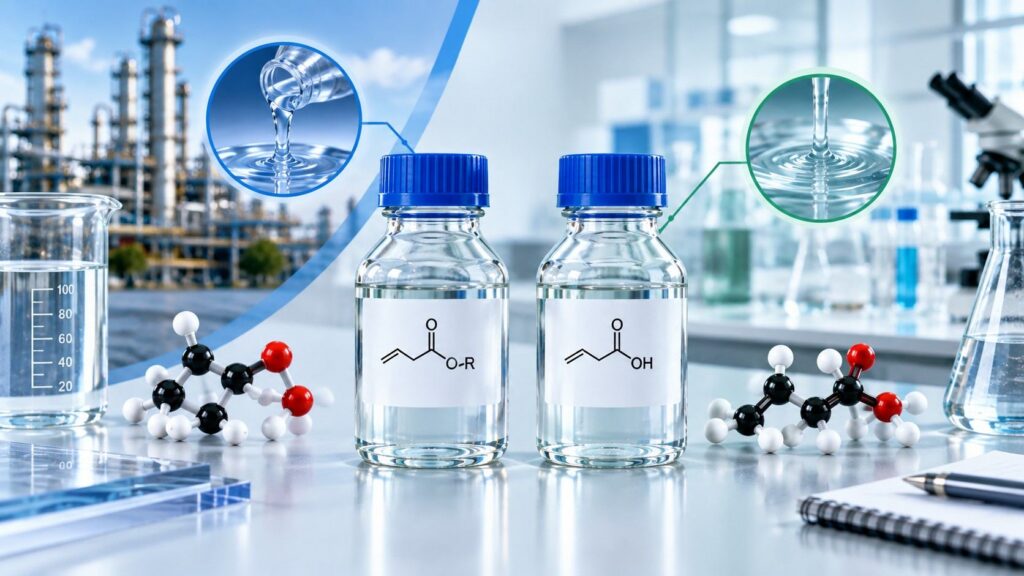
Two datasheets sit on your desk. One supplier lists “acrylic monomers” and the other lists “acrylate monomers.” The product lines overlap, but they are not identical, and neither datasheet says which family a given monomer belongs to. Formulators often face unclear labels on supplier pages, datasheets and quotes. Choosing the wrong sub-family can lead to […]
Best Acrylic Monomers for UV-Curable Coatings: How to Compare Your Options
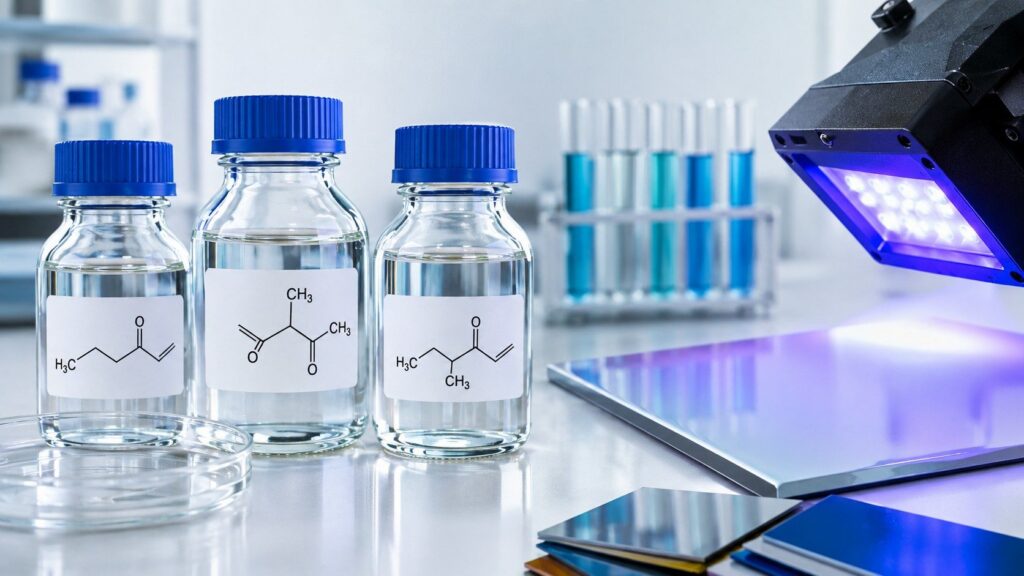
You have a spec sheet with a target viscosity, a line speed, and a hardness window, and two or three monomers on the bench. The decision is a comparison, and no ranked list of the best acrylic monomers can make it for you, because the winner in one UV system fails in the next. This […]